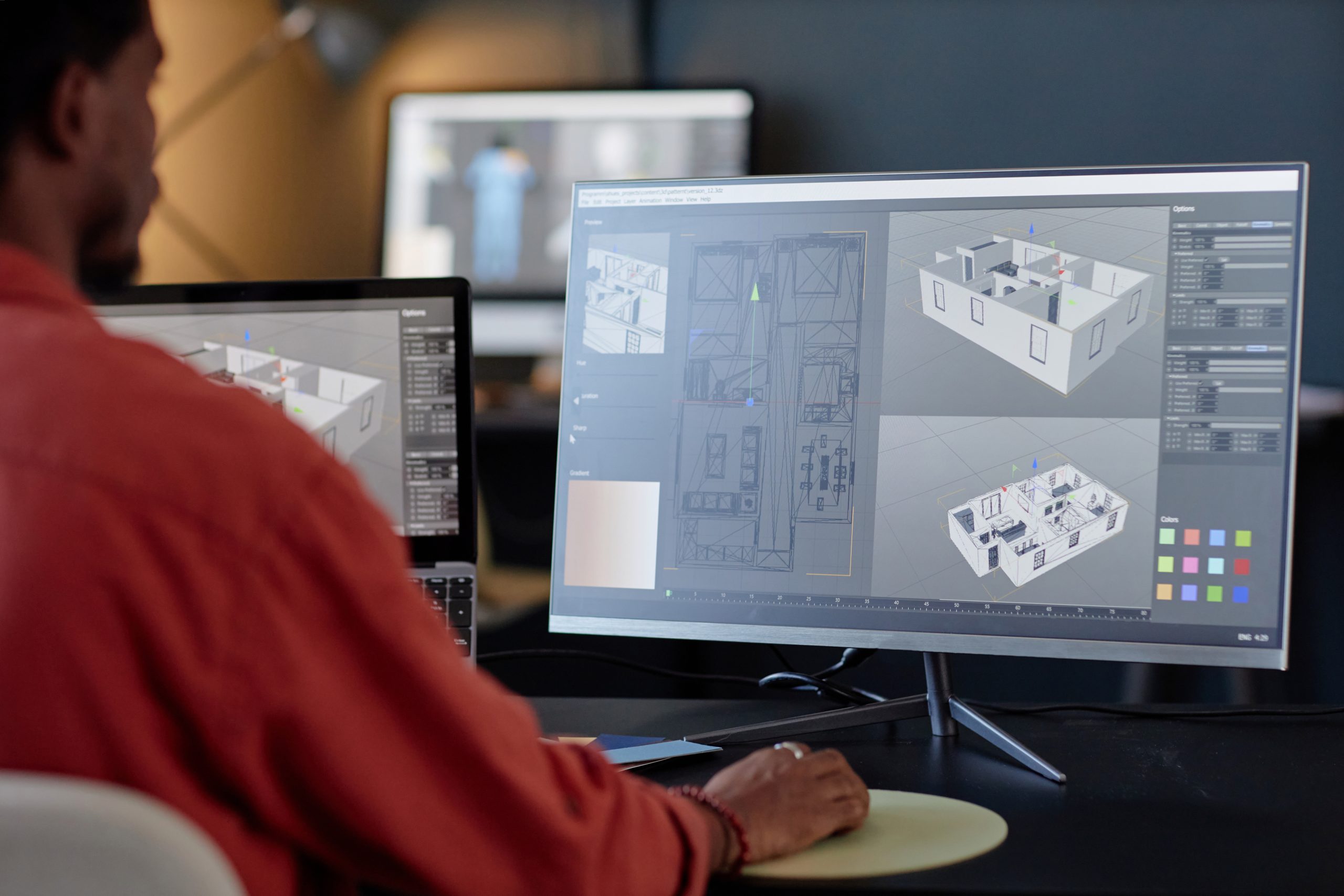
Can a Digital Twin Support a Net Zero Building Estate?
Managing the environmental performance of a large building estate is rarely straightforward.
Universities, local authorities, healthcare providers and other major asset owners may be responsible for buildings of different ages, construction types and uses. Energy information may sit in one system, maintenance records in another and occupancy data elsewhere. And the data may vary widely in quality and granularity from one building to the next.
EstateTWIN is an active University of Edinburgh research project exploring how these different forms of information can be brought together within a digital twin to support the University’s Net Zero Strategy. Dr Frédéric Bosché is the project’s principal investigator, and the research is currently scheduled to run until February 2027.
More Than a Three-Dimensional Model
In the EstateTWIN project, the digital twin is intended to be more than a static three-dimensional model.
It brings spatial information together with changing operational data from the physical estate, including energy consumption, occupancy and indoor environmental conditions.
The proposed system connects the physical building with its digital representation through operational data flows. This creates an environment in which different forms of building-performance information can be viewed and assessed together to support decision making and their subsequent monitoring.
EstateTWIN is a collaboration between the University of Edinburgh, Edinburgh World Heritage Trust and Historic Environment Scotland, with funding and support from the Centre for Net Zero High Density Buildings and Bentley Systems.
Five Connected Layers of Information
The project aims to integrate five principal layers of information.
Geometry and topology
This records the size, shape, arrangement and connections between spaces, buildings and the wider campus.
Energy
Real-time energy-consumption data can provide greater visibility of how individual buildings are using energy.
Building fabric
Information about walls, roofs and openings can include their composition, performance and physical condition.
Occupancy
Real-time occupancy data can show how rooms and zones across the estate are being used.
Indoor environment
Real-time indoor air-quality information can give estate teams greater visibility of environmental conditions within individual rooms and spaces.
Each layer may be useful on its own, but it may also be hard to understand and misleading. EstateTWIN aims to demonstrate the value of connecting them.
For example, bringing these layers together could allow estate teams to investigate whether patterns in energy consumption are associated with factors such as building-fabric performance, building space typologies, occupancy or indoor conditions. It can also help establish the minimum level of sensing that may be necessary to obtain missing data (e.g. energy submetering, fabric information, etc.) to enable robust decision making.
What Could This Mean for Asset Owners?
For organisations managing large or complex estates, EstateTWIN demonstrates the potential value of integrating spatial, fabric, energy, occupancy and indoor-environment information rather than assessing each dataset separately.
A more connected view of building performance could support better-informed operational and maintenance decisions. It could also help estate teams identify where further investigation or building-performance interventions may be required.