
An independent report analysing the impact of Early Contractor Involvement.
This Government-backed industry whitepaper examines the cost, programme and risk impact of Early Contractor Involvement across 412 public-sector projects.
Download the Whitepaper
Constructing Certainty, published by the Centre for Construction Best Practice (CCBP)
This whitepaper analyses 412 public sector projects delivered by 55 contractors across the UK, mapping contractor appointment timing against final cost and programme performance. Alongside raw project data, the study has captured case studies and industry sentiment from main contractors, professional services organisations, academic partners and industry figures.
Download the WhitepaperOrganisations who shared project data, case studies and industry sentiment.






Why this research
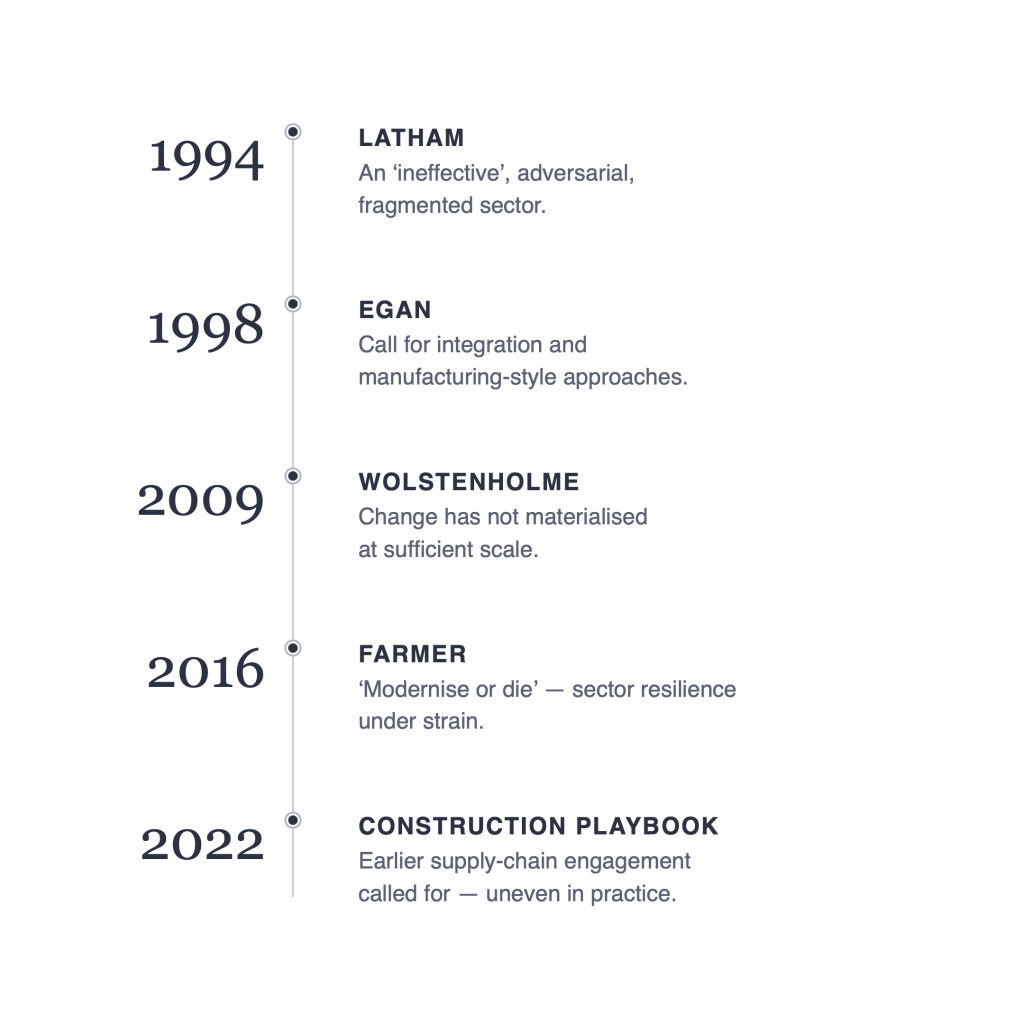
Thirty years of guidance.
The same conclusion.
Still not adopted at scale.
Too often, procurement manages risk through process rather than through collaboration. Lowest-price tenders, short windows, and late engagement push risk down the supply chain, and problems surface too late to fix within budget.
Every major review since 1994 has pointed in the same direction: bring delivery expertise in earlier, reduce fragmentation, focus on outcomes. This paper tests, at scale, whether ECI genuinely improves delivery by using raw data from real public sector construction projects.

Discover the findings in full
Read the evidence in full alongside case studies, industry sentiment and three recommendations.
Download the WhitepaperA clear inflection point at RIBA Stage 3
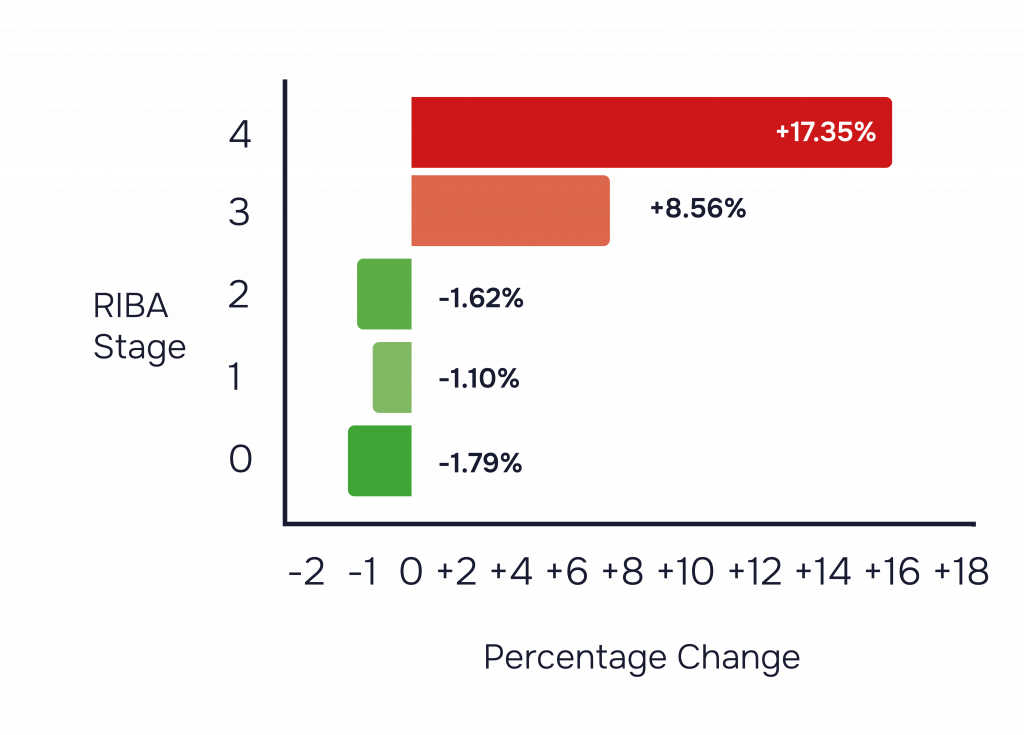
Across 412 public-sector projects, cost performance stays broadly stable when contractors are involved before RIBA Stage 3. After that, there is a clear inflection point: cost accelerates sharply, consistently, and at portfolio scale.
Cost variance by RIBA stage of contractor appointment.
Projects appointing contractors at RIBA 0–2 outperformed the original client budget on average. At RIBA 3, cost performance deteriorates. By RIBA 4, average cost growth reaches +17.35%.
- x = percentage cost saving or overrun
- 55 contractors contributing data, every UK region represented
- Outturn vs. original client budget
Apply these percentages to the £725bn UK pipeline and the implications are enormous.
Illustrative scenario modelling against the 10-year UK infrastructure pipeline (HM Treasury, 2025) shows provides a sense of scale to the report findings.
"Too often, our procurement system is designed to manage risk through process rather than reduce it through collaboration. Lowest-price tendering, short procurement windows and late engagement create a system where risk is pushed down the supply chain and problems are discovered too late. That approach does not protect the public purse. It undermines it. This report provides a clear path forward. The challenge now is simple: do we continue to design a system around mistrust, or do we build one that delivers?"

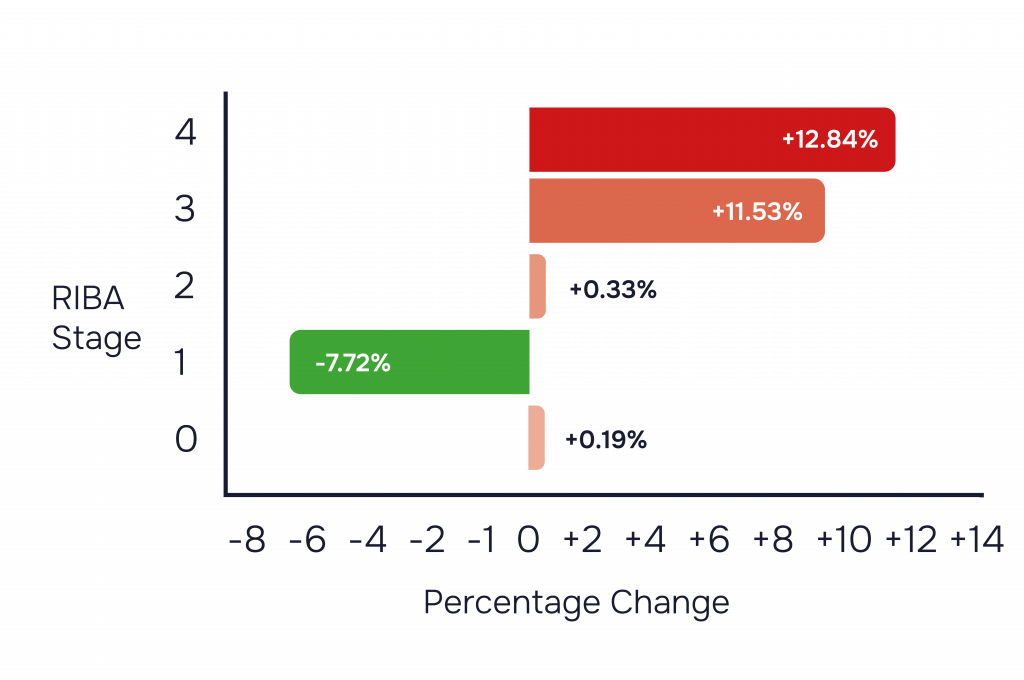
Programme variance by RIBA stage of contractor appointment.
Early contractor appointment was associated with minimal change or improvement in programme length, RIBA 1 correlated with a −7.72% reduction in programme duration.
Later appointment was associated with significant deterioration: +11.53% at RIBA 3, rising to +12.84% at RIBA 4.
Discover the findings
Read the recommendations, case study evidence and full portfolio modelling in the whitepaper.
Download the WhitepaperThree controls. Timing, capability, value.
Measurable, auditable and proportionate. Together they define clear timing, capability and value controls for public-sector capital delivery.

Mandate contracted early involvement by RIBA Stage 2.
Applied as the default on public-sector capital projects above £5m, proportionate to risk and complexity. Prioritise refurbishment and renewal as the first area where the standard is applied.

Strengthen public-sector capability and confidence in ECI.
Standard guidance, templates and training to make early involvement consistent and auditable, . reduces fear of compliance risk by making routes and evidence standards clearer.

Introduce mandatory value checks at award.
Lowers the incentive for 'price-to-win' behaviour, closing the implementation gap left by the Procurement Act's MEAT → MAT shift and protecting whole-life value.
Strategic Alignment
The ECI research conducted by CCBP has been strategically aligned with our Industry and Academic Advisory group's. Each shape the direction of CCBP and the research we undertake. By bringing academia and industry together, we create a government backed research to deliver real-world impact.



Start a conversation.
If you're interested in CCBP's policy and research activities with industry, Government, and academic, there are various ways of engaging with us. Get in touch.

Research & Briefings
We are offering private briefings on the findings for procurement leads, departments and senior teams, tailored to your portfolio.

Partnership
Collaborate on the next stage of research, training, or industry projects. Contribute data, expertise, or sponsorship to advance the evidence base.

Press & Media
Request a press kit, headshots, quote back and interview availability. Contact marketing@ccbp.org.uk for the full press kit.
Partner with Us
Collaborate on the next stage of research, training, or industry projects. Contribute data, expertise, or sponsorship to advance the evidence base.
Get in Touch