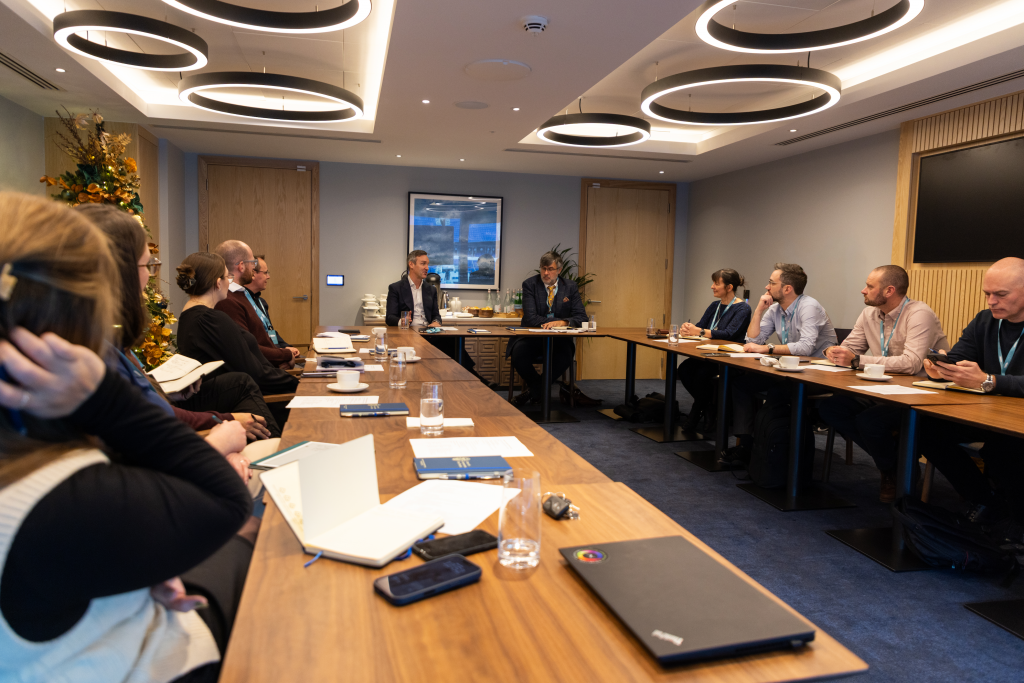
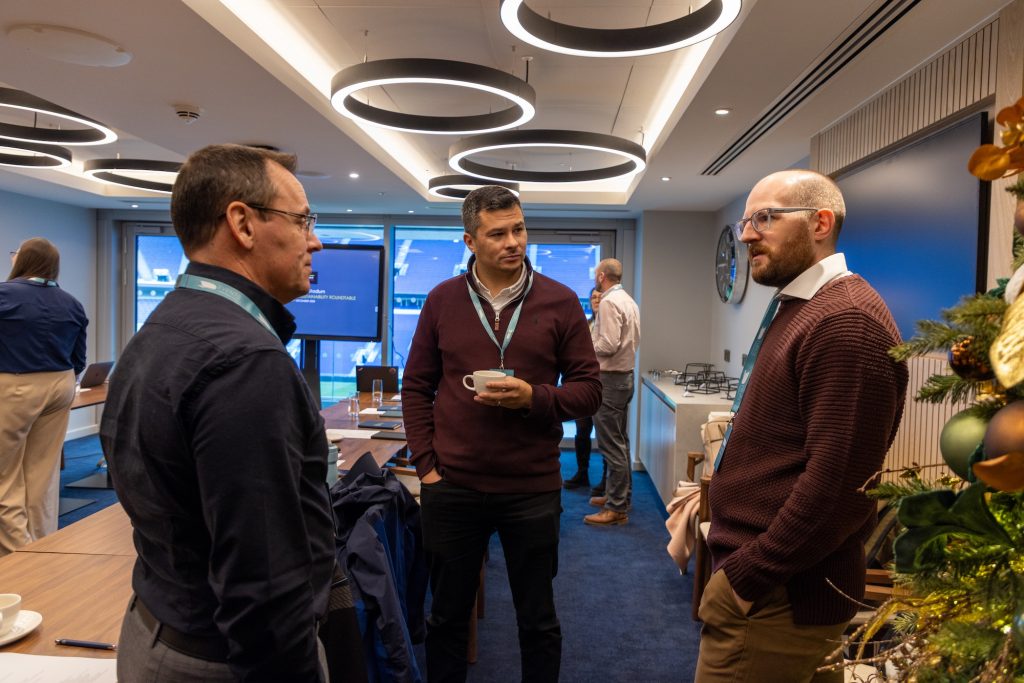
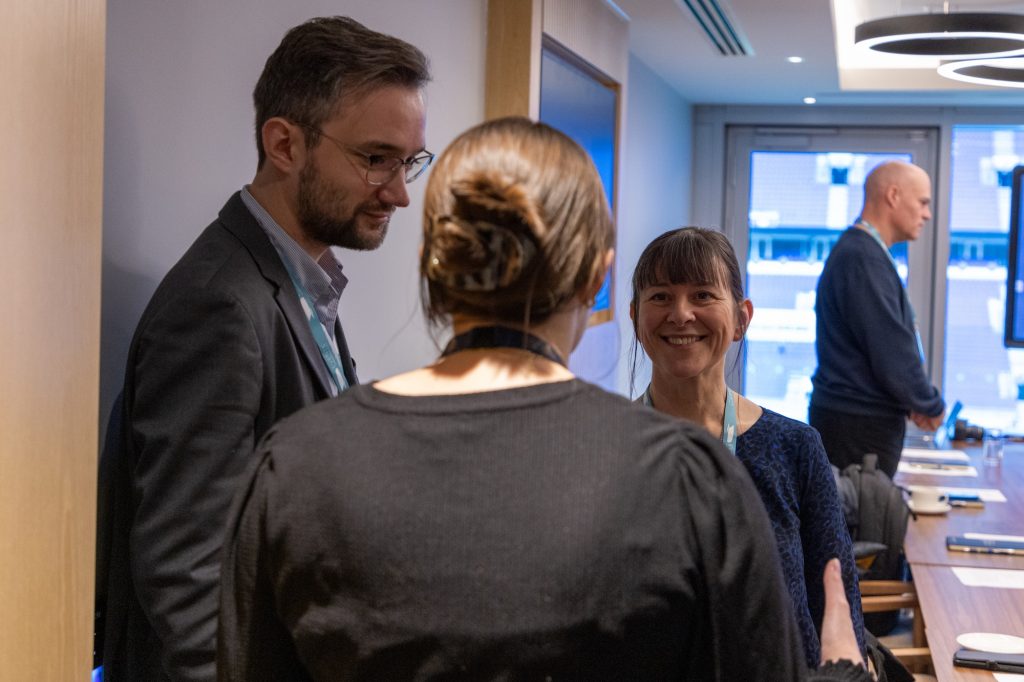
The Centre for Construction Best Practice (CCBP) connected leading academics, sustainability specialists, and industry practitioners on 3 December 2025 for a high-level Environmental Sustainability Roundtable at the Hill Dickinson Stadium. The event marked the launch of CCBP’s next major research theme and brought together experts from the University of Liverpool, University of Leeds, Laing O’Rourke, BAM, AHR, Morgan Sindall, Stepnell and Kier to explore the most urgent sustainability challenges facing UK construction.
The roundtable focused on identifying the sector’s most persistent gaps, tensions, and opportunities, with discussion centred on policy, carbon measurement, Environmental Product Declarations (EPDs), Life Cycle Assessment (LCA), accountability, and sector-wide knowledge requirements. Each attendee shared their primary sustainability concern, creating an open foundation for a collaborative and forward-looking conversation.
A recurring theme throughout the roundtable was the pace and volume of policy change, with participants noting a proliferation of new mandates, certifications, and decarbonisation targets that are often seen as ambitious but disconnected from practical delivery realities. One contributor observed that “the volume of policy change is now outpacing the industry’s ability to realistically implement it on the ground.”
The fragmentation of the supply chain was also highlighted as a structural barrier to progress. Thin profit margins and rising compliance costs were seen to be constraining innovation, particularly for smaller manufacturers and subcontractors. As one participant noted, “many suppliers want to do the right thing, but the resources required to meet certification and reporting demands are simply out of reach for some.”
Circular economy principles were widely recognised as critical to the future of sustainable construction. However, attendees acknowledged that significant operational hurdles remain, particularly around the logistics of material reuse, reverse supply chains, and the disconnect between demolition, waste management, and material supply networks. The discussion reinforced the need for better integration between these stages if circularity is to be achieved at scale.